Corporate Event AV Production | 5 Indispensable On-Site Commissioning Procedures

Updated: 6 hours ago
For large-scale events such as corporate annual galas, failures in audio-visual (AV) systems — no sound during the CEO’s speech, flickering or blackout of the LED wall, or sudden piercing audio feedback — can derail a million-dollar event in an instant.
According to recent statistics from leading international AV integration authorities and Eventgroove, over 40% of global corporate project managers regard events as a primary marketing channel [1]. Meanwhile, senior AV specialists emphasise that standard on-site testing & commissioning must be completed before event setup at venues to mitigate on-site technical failures [2].
So what mandatory safety and technical procedures must the AV production team carry out during venue walkthrough and commissioning?
AV reliability is far more than simply “plugging in and powering up”. Drawing on major concert incidents worldwide in recent years, the Leisure and Cultural Services Department (LCSD) clearly states that “the safety factor for rigging systems must meet or exceed international standards” and the actual weight of screens must match their declared weight.

Venue hirers and technical teams must comply with regulatory requirements: “The weight of temporary structures and equipment added must be accurately verified by registered professionals appointed by the hirer… and load testing must be performed for all movable or lifting mechanical systems.” — Investigation Report on the MIRROR Concert Incident [3]
Why Are Soundcheck and Venue Walkthrough Often Cut Short for Corporate Events?
Senior stage AV production directors interviewed point out that compressed timelines are the root cause of most corporate event mishaps.
Many corporate functions held in hotel ballrooms only allow a 2–3 hour setup window. To cut venue rental costs, organisers routinely reduce time allocated for soundcheck and system commissioning.
Corporate Event AV Production: 5 Non-Negotiable On-Site Commissioning Steps
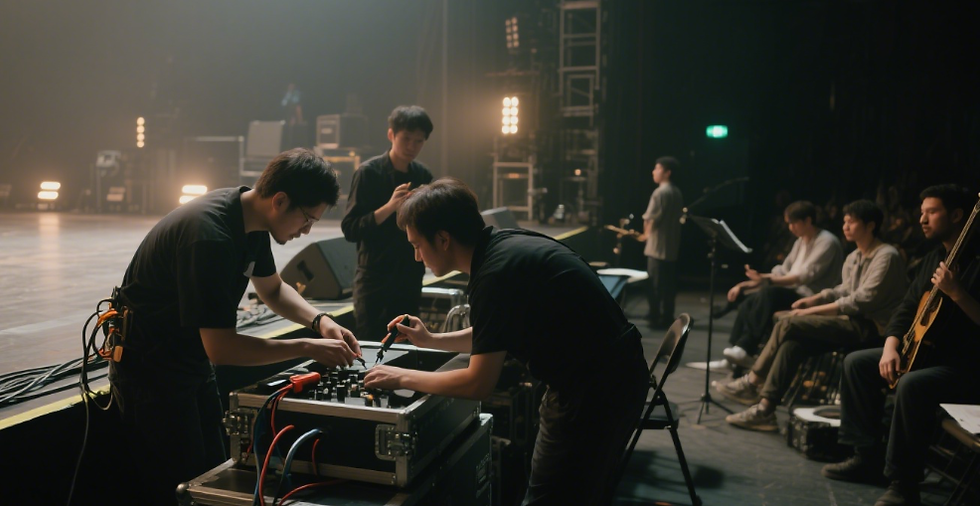
Full-load Power Testing and Earth Ground Inspection
In compliance with the Electrical and Mechanical Services Department (EMSD) guidelines for temporary electrical installations, registered electrical workers must conduct load testing and earth resistance measurements on site [4].
Lighting, LED walls and audio systems shall be powered via separate phase supplies, followed by a 15-minute full-load burn-in test.
Corporate Event AV Production | Dynamic RF Spectrum Sweep and Frequency Reservation
A professional spectrum analyser is used to scan the site environment to avoid interfering frequencies. Backup frequency bands are preconfigured for microphones used by key speakers.
Acoustic Feedback Suppression and Full Venue Walkthrough Soundcheck
The mixing engineer performs a full-room walkthrough soundcheck, moving with a microphone across all stage zones and the front audience rows. Gain levels are raised to identify acoustic feedback nodes, which are then tuned via parametric equalisers.
Dual Redundant Video Signal Setup and Switchover Testing
Two independent computers (main / backup) are configured for synchronous playback, feeding output through a professional video switcher. During commissioning, the main video signal cable is physically unplugged mid-playback to verify seamless backup takeover within 0.5 seconds.
LED Wall Refresh Rate Calibration
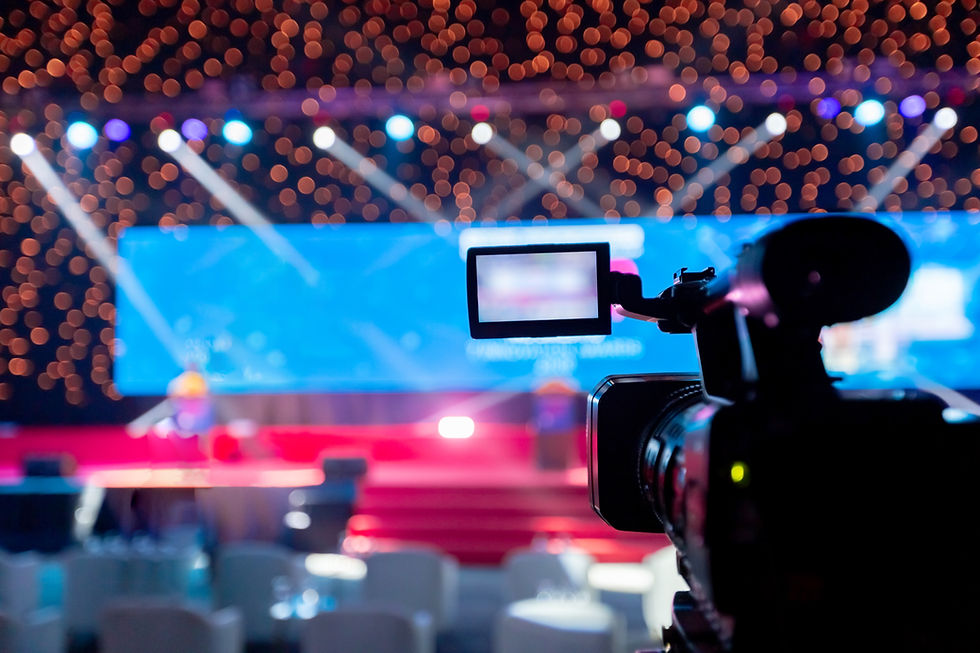
Set the LED wall refresh rate to 3840Hz or higher during commissioning, paired with camera shutter speed synchronisation tests via on-site recording.
References
[1] Eventgroove (2025). 80+ Must-Know Event Industry Statistics: Corporate Event Impact Benchmarks.
[2] Level 3 AV Integration Report (2025). Event Spaces Reimagined: AV Technology Trends & Reliability Analysis.
[3] Leisure and Cultural Services Department, HKSAR Government (2022). Investigation Report on the MIRROR Concert Incident on 28 July 2022 at Hong Kong Coliseum.
[4] Electrical and Mechanical Services Department (EMSD), HKSAR (2024). Code of Practice under the Electricity (Wiring) Regulations and Guidelines for Temporary Stage Electrical Installations.
Disclaimer
This article synthesises publicly available industry research, official technical investigation reports and interviews with industry practitioners. It serves solely as technical reference for corporate event planners and AV engineering professionals. All electrical installations, structural load assessments and fire safety arrangements for individual events must be inspected and certified on-site by registered electrical contractors (RECs) and qualified structural engineers. This platform accepts no liability for any direct or indirect loss arising from actions taken based on content herein.